Time to Upgrade your Mower
Products
Smart Farming
Service & Parts
Discover CLAAS
Career
Press
About CLAAS

Three Signs It's Time to Upgrade Your Mower

Time to Upgrade your Mower

1. You can't finish mowing within your quality window.


In high-moisture regions, letting cut crop sit too long risks quality loss. In drier climates like the western U.S., crops can dry out before baling is complete. Either way, the clock is working against you.


Wyatt Gigot of MG Hay Farms and Thunderstruck Farms in Garden City, Kansas, knows this pressure firsthand. His operation runs 10,000 irrigated acres, aiming for five cuttings of alfalfa during the growing season, spread across 30-day intervals. They also double-crop triticale in the spring and sorghum in the fall. With that kind of calendar, they need a faster cure and dry down time that keeps their season on track.


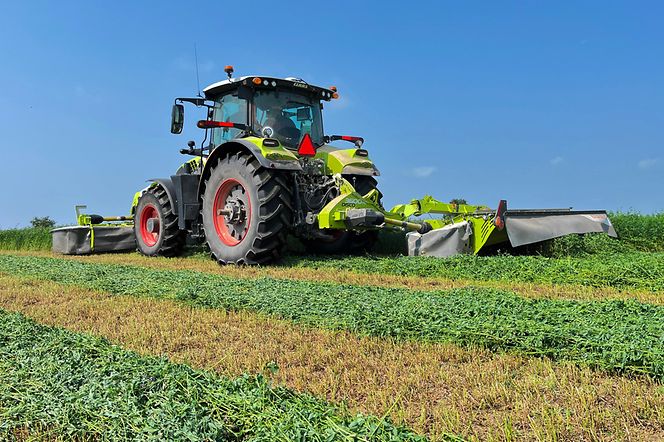
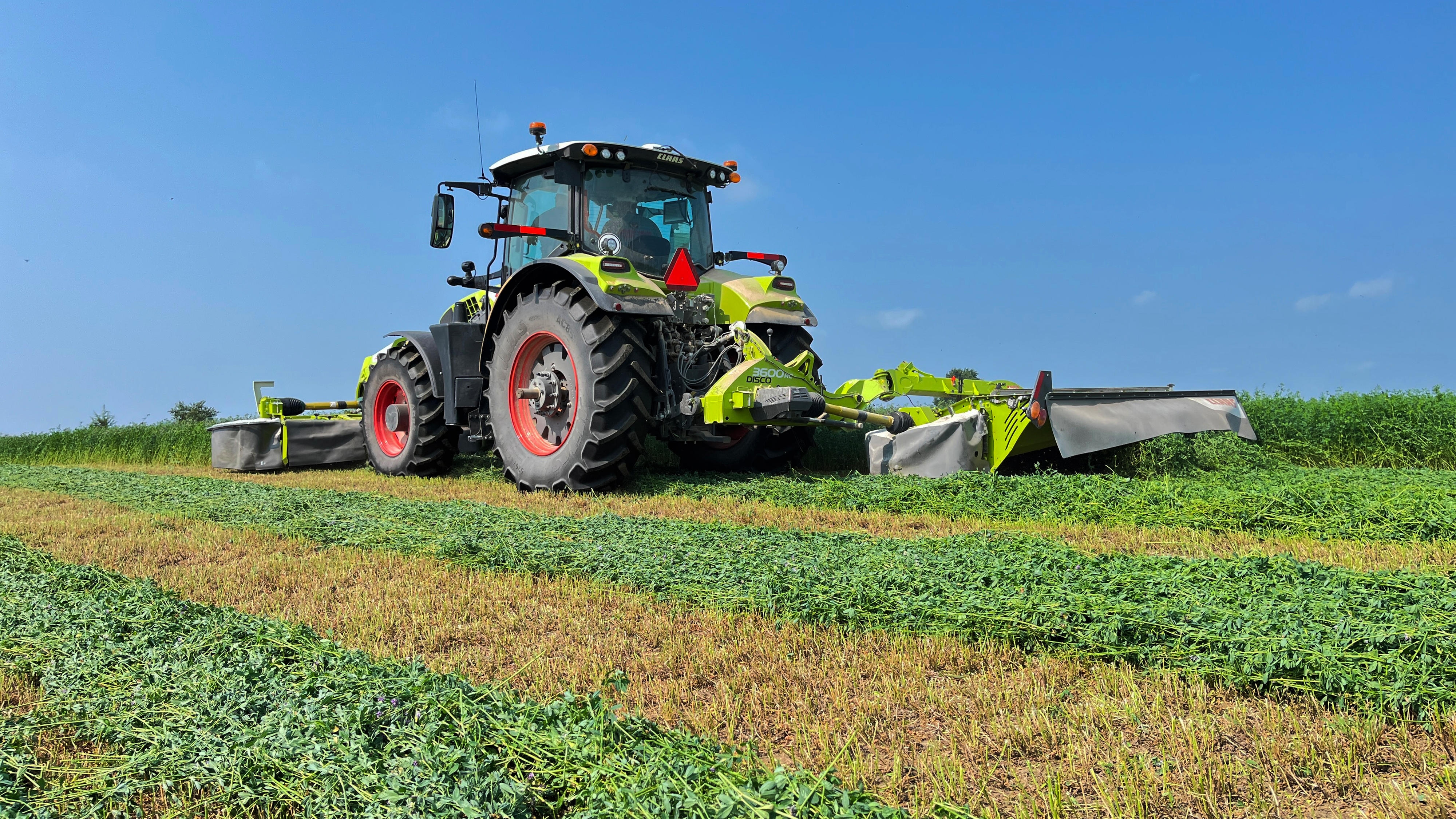
When Gigot switched to disc mowers from a self-propelled machine, smaller windrows meant faster dry-down, more consistent hay quality and fewer input costs. One disc mower replaced two self-propelled swathers, sparing two operators and reducing fuel costs in the process. "It was an absolute no brainer in our eyes to make the change," Gigot says.


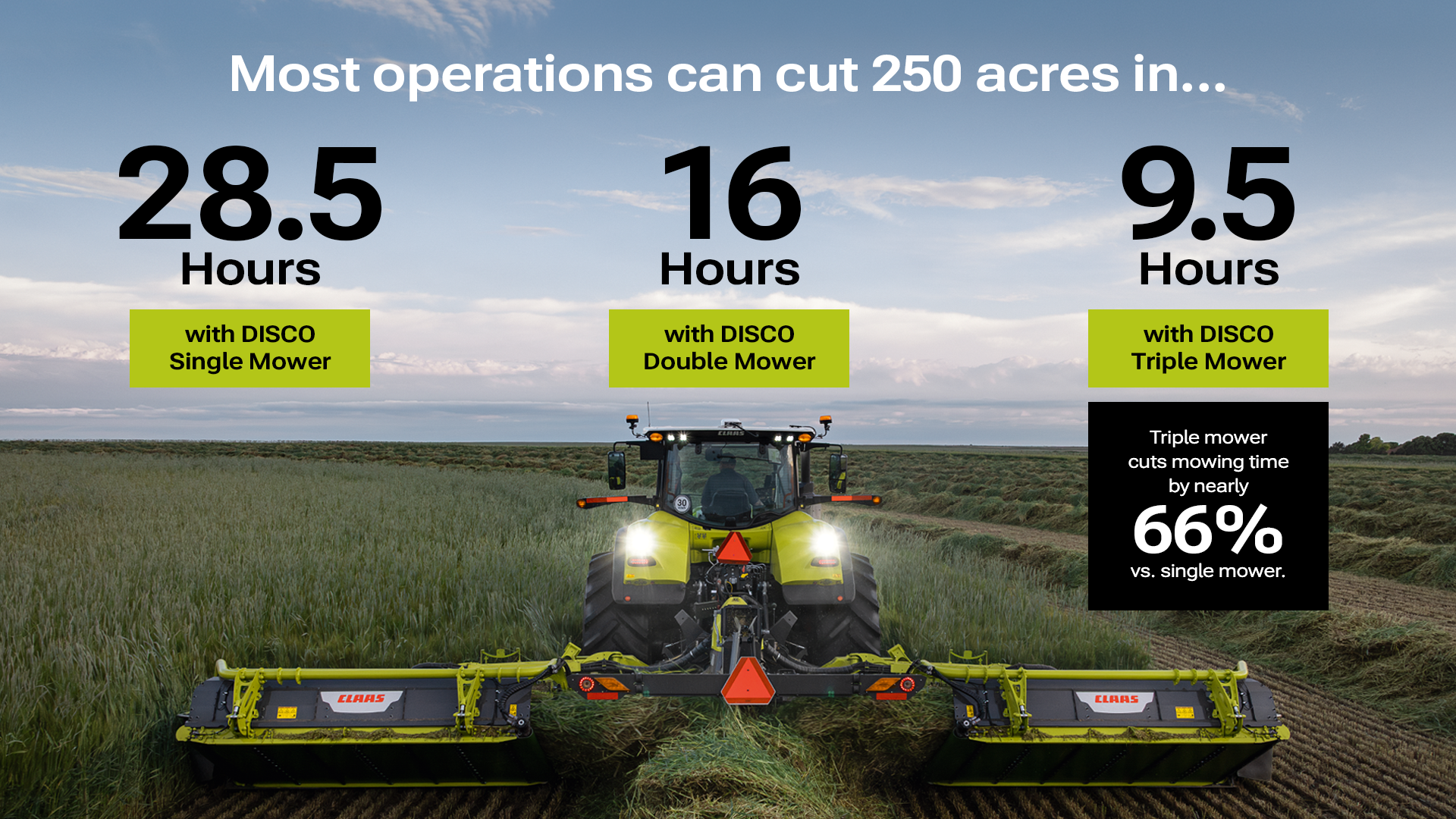
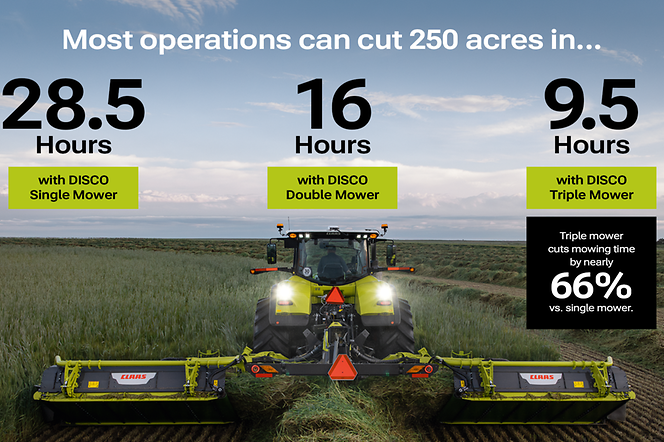
Based on CLAAS data, most operations can cut 250 acres in about 28.5 hours with a single 13-foot mower. A double mower brings that down to 16 hours, and a 30-foot triple mower down to 11.2 hours. For peak efficiency, a 35-foot mower reduces time invested to 9.5 hours, nearly one-third of the time of a single mower. Fewer passes also mean less fuel burned and less soil compaction.


Ask yourself: 
•    How many acres do I need to cover each day? 
•    What’s the return on investment or ROI of cutting my acres in one day versus two, from both a quality and time-savings perspective?
•    What size tractor am I working with?


Your region, cutting windows and crop type all shape when a single mower stops being enough. A mid-sized forage operation in Kansas (average 27 inches of rainfall per year) will pencil out very differently than the same operation in Pennsylvania (average 42 inches). If you can't complete mowing within the timeframe your crop quality demands, it's time to look at a double or triple mower.

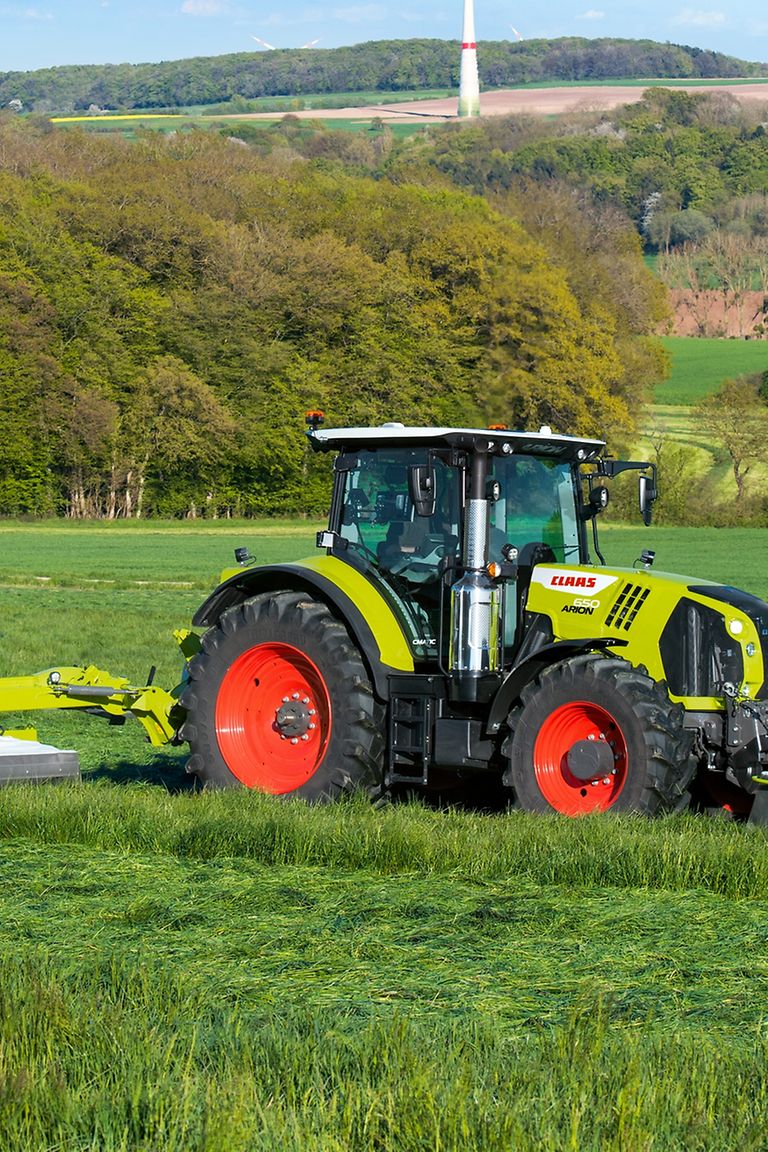
Debating between a double or triple mower? Daily acreage goals, target completion time and available tractor horsepower are the deciding factors. Triple mowers require more horsepower, but tractors with a front hitch and PTO capability are worth exploring — in many markets, they offer a path to added capacity. CLAAS AXION tractors are well-suited for triple mower configurations and pull double duty across a range of farm tasks. Additionally, the CLAAS ARION is a great fit for double mowers and offers flexibility for various tasks around the farm like loader work and baling.
 

2. You already have the supporting equipment to justify the upgrade to a double or triple mower.


Upgrading to a double or triple mower is not only about whether your operation can take full advantage of the added capacity. If you already own a higher-horsepower tractor you're using for tillage or planting or manure hauling, or a high-performance baler that demands that kind of power, you may find that your mower is simply the bottleneck holding you back. [AK1.1]Even if your operation already has the acreage and equipment to justify it’s also about time savings – what else can you accomplish instead with that time savings? Upgrading to a disc mower lets you get more out of your existing equipment.


Wyatt Gigot's operation illustrates the point — the same tractors that power his disc mowers run manure spreaders in winter, eliminating the need to buy or lease additional machines the way he would with dedicated self-propelled swathers.

If your mower is the weakest link in an otherwise capable system, that's a clear signal it's time to upgrade.

3. Maintenance is becoming a headache.


Older equipment naturally accumulates wear, and while it's difficult to put a hard number on repair costs, a machine that's regularly pulling you out of the field for fixes is costing you in time and potential revenue.


Beyond reliability, mower technology has advanced meaningfully over the past 15 years. Steel conditioning rolls, for instance, allow operators to gain roughly 3 mph over rubber rolls in the same field conditions on the same tractor — a real capacity boost without added horsepower.

CLAAS disc mowers also feature wave-designed cutter bars that help redirect soil and debris, like gopher mounds, to flow under the cutterbar and away from the crop stream rather than pulling it through. This directly reduces ash content in the windrow and improves forage quality and nutritional value. Adjustable cutter bar RPM also plays a role. Running at lower speeds in more delicate crops reduces turbulence and minimizes leaf loss during the cutting pass.

Streamlined controls, ISOBUS compatibility and better tractor hydraulic integration round out the user experience improvements, making newer machines more accessible for 

The Bottom Line on ROI


Anyone involved in agriculture knows that efficiency can make or break your bottom line. Getting the job done in fewer hours means you can take on more acres, tackle other jobs or spend more time with family. So, when you add up efficiencies gained by upgrading mowers, don’t discount the value of your time.


The right upgrade, at the right time, might just pay for itself. Talk to your local dealer today: https://www.claass.sbs/en-us/about-claas/locations/claas-dealers